

You can lie next to someone you love and still feel alone. You might talk every day, but not feel understood.
That’s the tension many couples feel with emotional intimacy vs physical intimacy. One partner wants more closeness and conversation. The other wants more touch, more desire, more connection that feels effortless.
When that gap keeps growing, small moments start to sting. A hug can feel empty. A deep talk can feel like pressure.
This guide will help you understand emotional intimacy vs physical intimacy, and how they work best together. You’ll learn simple ways to rebuild safety, desire, and everyday closeness without forcing it.
After years of working with couples, I’ve learned that this disconnect isn’t about effort or love. It’s about understanding how intimacy really works.
What Are Emotional Intimacy and Physical Intimacy?

Emotional and physical intimacy support different needs in a relationship. Both matter, but they work in different ways. Understanding the difference helps couples stop misreading each other.
Emotional Intimacy
Emotional intimacy is the feeling of being safe, seen, and understood. It develops when you can share thoughts and emotions without fear of judgment. This kind of closeness builds trust over time.
It often shows up quietly. Comfortable silence. Knowing you don’t have to explain yourself to be accepted.
Common signs of emotional intimacy include:
- Sharing fears and hopes openly
- Feeling listened to during vulnerable moments
- Trust during conflict
- Ease being together without filling the space
Emotional intimacy asks a simple question. Am I safe with you?
Physical Intimacy
Physical intimacy is connection through touch and desire. This includes hugging, hand-holding, cuddling, kissing, and sex. Even non-sexual touch communicates closeness and care.
Touch works quickly. It calms the nervous system and builds bonding through the body. A hand on your back or sitting close can restore connection without words.
Physical intimacy asks a different question. Do you want me?
How They Work Together
Research consistently shows emotional closeness is one of the strongest predictors of long-term relationship satisfaction. A 2023 study of married couples found emotional intimacy predicted satisfaction even when physical and spiritual factors were present. Physical intimacy, meanwhile, supports desire, bonding, and everyday warmth.
When emotional safety is missing, touch can feel hollow or forced. When physical closeness fades, emotional sharing can lose energy.
When both are present, intimacy feels steady, mutual, and alive.
Why Emotional and Physical Intimacy Need Each Other

It’s common to wonder if emotional intimacy and physical intimacy compete with each other. They don’t. They depend on each other to create a relationship that feels both secure and alive.
Emotional intimacy creates safety. It allows you to relax enough to be honest, imperfect, and open with your partner. Without that safety, physical closeness can start to feel tense, pressured, or disconnected. Building that sense of safety is often part of relationship coaching focused on emotional trust.
Physical intimacy supports that safety in a different way. Touch communicates reassurance when words fall short and emotions feel hard to explain. It reminds your partner that closeness is wanted, not just tolerated.
This is why one often weakens when the other fades. When emotional connection drops, touch can feel empty or mechanical. When physical closeness disappears, emotional sharing can begin to feel one-sided or stalled.
A simple moment makes this clear. A hug feels grounding when you feel understood and emotionally met. The same hug can feel awkward or distant when emotional safety is missing.
Emotional intimacy makes vulnerability feel safe. Physical intimacy makes vulnerability feel welcomed. Together, they create a steady loop of trust and desire that helps relationships stay connected over time.
How Your Attachment Style Affects Emotional Intimacy and Physical Intimacy

Your attachment style shapes how you experience closeness with a partner. It influences when you feel safe opening up and when touch feels comforting or stressful. Understanding this helps couples stop personalizing each other’s reactions.
Secure Attachment
People with a secure attachment tend to feel comfortable with both emotional and physical intimacy. Research shows that securely attached individuals are more likely to be comfortable with closeness and trust in relationships, and willing to both give and receive support from others.
They can share openly and receive closeness without overthinking it. Touch and vulnerability naturally reinforce each other.
Anxious Attachment
Anxiously attached partners often need emotional intimacy first. They look for reassurance, understanding, and emotional presence before physical closeness feels safe. Without that foundation, touch can increase fear rather than ease it.
Avoidant Attachment
Avoidantly attached partners often experience the opposite pattern. Physical intimacy feels easier than emotional vulnerability, which can feel exposing or overwhelming. They may offer closeness through touch while pulling back from deeper conversations.
When Emotional Intimacy Comes First
For some people, emotional intimacy is a prerequisite for physical desire. Trust and emotional connection need to be established before physical closeness feels meaningful. Without that bond, touch can feel disconnected or unfulfilling.
These differences explain much of the tension couples feel. The partner asking for emotional talks isn’t being needy, and the partner offering touch instead of conversation isn’t being uncaring. Each is trying to feel safe in the way they know how.
Anxious partners can practice receiving physical closeness as reassurance. Avoidant partners can begin with small, low-pressure emotional sharing. With patience, attachment styles become a guide for building both emotional security and physical connection together.
Simple Ways to Build Emotional and Physical Intimacy
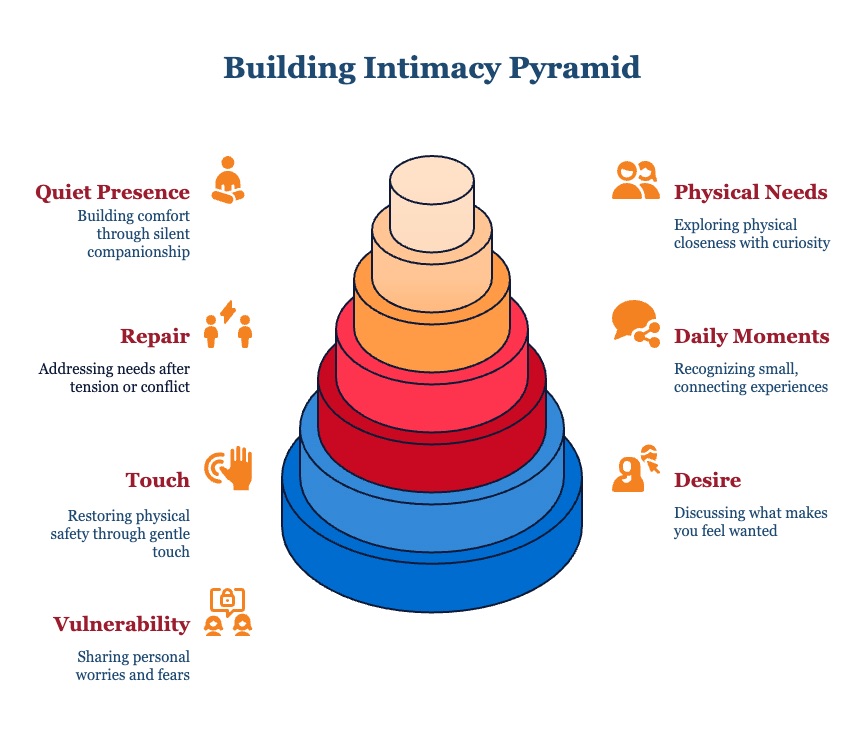
When closeness feels strained, the goal isn’t to say the perfect thing. It’s to create moments where connection feels safe again. These ideas are meant to fit naturally into real conversations, not feel rehearsed.
1. Creating Space for Vulnerability
You might start by sharing something that’s been sitting with you. Inviting your partner to share a worry or fear can open emotional closeness gently. Going first often makes this feel safer for both of you.
2. Talking About Feeling Desired
Desire isn’t only about sex. Sharing what helps you feel wanted, and asking the same of your partner, builds understanding on both sides. This helps emotional connection support physical closeness.
3. Rebuilding Comfort With Touch
Sometimes closeness needs to slow down before it can grow again. Asking for simple, pressure-free touch can restore physical safety. This is especially helpful when touch has started to feel tense or uncertain.
4. Noticing Daily Moments of Connection
Small moments matter more than grand gestures. Naming one moment that felt connecting keeps intimacy present in everyday life. It also helps partners see what already works.
5. Repairing After Tension or Conflict
Moments of upset are unavoidable. What matters is naming what you needed once things calm down. This turns conflict into understanding instead of distance.
6. Exploring Physical Needs With Curiosity
Talking about physical closeness works best when it’s curious, not critical. Inviting your partner to share what feels good or supportive builds trust. There’s no rush to change anything right away.
7. Practicing Quiet Presence
Connection doesn’t always need words. Sitting together in silence can build comfort and closeness. Being present together often says more than conversation.
Try one of these ideas at a time. Small, steady moments of closeness often rebuild intimacy faster than big conversations.
Bringing Emotional and Physical Intimacy Back Into Balance
Emotional and physical intimacy aren’t problems to solve. They’re signals showing you where connection wants more care. When both are supported, relationships feel safer, warmer, and more alive.
You don’t need to fix everything at once. Small shifts in understanding, presence, and closeness often create the biggest change. Over time, emotional and physical intimacy begin to support each other again, naturally.
If you and your partner feel stuck in this disconnect, support can help. Sometimes an outside perspective makes these patterns easier to see and shift. If you’re ready to strengthen emotional and physical intimacy in your relationship, reach out today and take the next step toward feeling close again.
Frequently Asked Questions
Can you have emotional intimacy without physical intimacy?
Yes, emotional intimacy thrives through deep sharing and understanding, as in asexual relationships or illness recovery. It builds profound trust and safety independently, physical touch enhances but isn’t required for feeling truly seen.
Which is more important: emotional or physical intimacy?
Emotional intimacy drives long-term satisfaction, while physical fuels daily desire. Men often prioritize physical, and women balance both. Their synergy through communication creates the strongest relationships.
How do you build emotional intimacy?
Start with vulnerability shares like “What’s a fear you’ve never told me?” Add empathic listening and silence rituals. This builds safety, enabling sexual communication that boosts satisfaction by 49%.
Does emotional intimacy improve sex and physical connection?
Yes, emotional safety sparks open sexual communication, mediating 49% of sexual satisfaction variance. It creates genuine desire conditions reliably, turning physical intimacy into deeply fulfilling connection for both partners.
Why does intimacy die in long-term relationships?
Poor communication quality erodes emotional safety first, fading both types, not time scarcity. Revive with weekly check-ins, daily micro-touches, and small shares focusing on responsiveness over perfect sync.

