

You can share a home, handle daily life together, and still want more closeness in your marriage. Many couples reach a point where things work well, yet a deeper connection feels just slightly out of reach.
Emotional intimacy in marriage matters. It’s the feeling of being emotionally safe, understood, and accepted by your partner. It grows through everyday moments of listening, openness, and support, and it’s something couples can build at any stage of marriage.
In this article, you’ll learn what emotional intimacy in marriage looks like in daily life, why it can fade over time, and how couples can strengthen it in simple, realistic ways.
What Is Emotional Intimacy in Marriage? Everyday Examples
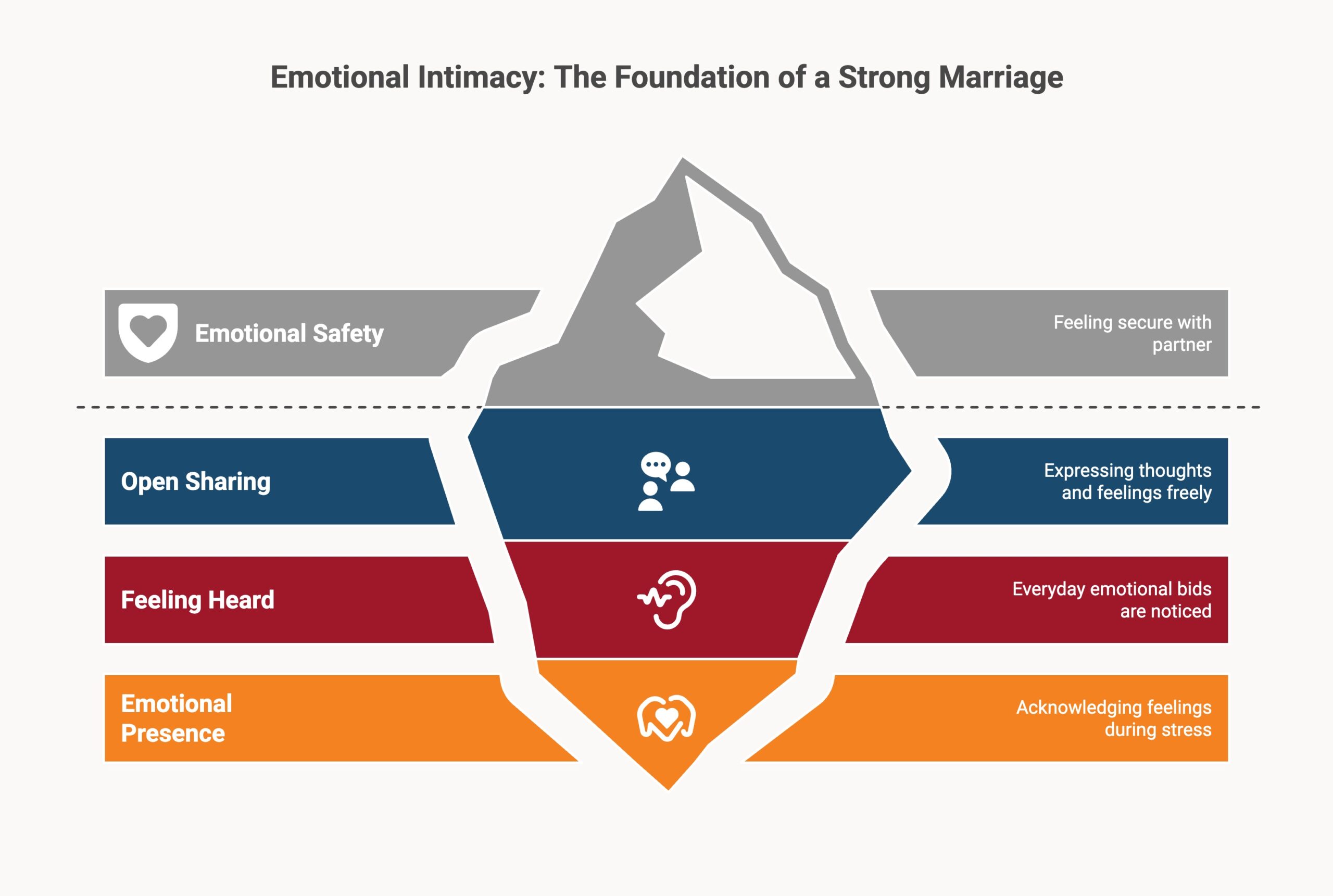
Emotional intimacy in marriage means feeling emotionally safe with your partner. It’s the ability to share thoughts, feelings, and concerns openly, knowing they will be met with care rather than judgment, dismissal, or defensiveness. Experts agree that emotional intimacy deepens trust, communication, and connection.
In daily life, emotional intimacy in marriage often shows up like this:
Sharing Honestly Without Fear of Judgment
Emotional intimacy is present when partners can talk about worries, doubts, or stress without feeling corrected or minimized. This might include sharing concerns about parenting, work pressure, or self-doubt and feeling accepted instead of rushed toward solutions.
Feeling Heard in Small Moments
Connection deepens when everyday emotional bids are noticed and met. When one partner mentions feeling overwhelmed, and the other slows down, listens, and responds with care, it reinforces the feeling of being supported and valued.
Staying Emotionally Present During Stress
During difficult seasons, emotional intimacy looks like acknowledging each other’s feelings instead of moving past them. It’s recognizing fear, sadness, or uncertainty and responding in ways that communicate, “We’re facing this together.”
Why Emotional Intimacy Matters in Marriage

Emotional intimacy in marriage plays a major role in how connected and satisfied couples feel over time. It matters as much as, and often more than, shared routines or physical closeness.
Key ways emotional intimacy supports long-term marital happiness include:
- Greater relationship satisfaction: Couples who feel emotionally connected report higher satisfaction because they feel close, supported, and valued, not just functional or cooperative.
- Healthier conflict and faster repair: Emotional intimacy helps couples recover from disagreements more quickly. When positive interactions outweigh negative ones, conflicts are less damaging and easier to repair.
- Protection against loneliness: Even during demanding seasons like parenting or career stress, emotional intimacy helps partners feel less alone and more supported.
- Stronger commitment over time: Emotional closeness reinforces trust and attachment, reducing emotional drift and the risk of seeking connection outside the relationship.
Emotional Intimacy vs. Physical or Sexual Closeness

Emotional intimacy in marriage and physical or sexual closeness are connected, but they are not the same. Each plays a different role in how couples feel connected and supported.
Emotional Intimacy in Marriage
Emotional intimacy is the sense of feeling emotionally safe, known, and accepted by your partner. It develops through honest conversations, empathy, and emotional openness.
When emotional intimacy is present, couples tend to feel supported during stress, conflict, and change. It creates steadiness and trust over time. Developing these habits through professional relationship coaching can help couples practice empathy and emotional responsiveness consistently.
Physical or Sexual Closeness
Physical or sexual closeness centers on touch, affection, and sexual connection. It can feel comforting or exciting in the moment. Physical closeness often feels more satisfying when emotional intimacy is strong, and less fulfilling when emotional connection is limited.
Emotional intimacy in marriage often provides the foundation that allows physical closeness to feel meaningful. When emotional connection is nurtured, closeness in all forms tends to feel more natural and secure.
Why Emotional Intimacy Weakens and Signs It’s Fading

Emotional intimacy in marriage can fade gradually. Busy schedules, stress, parenting, health issues, or unresolved conflict can make emotional closeness harder to maintain. When emotional safety drops, partners often pull back without meaning to.
Common signs emotional intimacy may be weakening include:
- Conversations becoming mostly logistical: Most communication focuses on schedules, tasks, or responsibilities, with little space for personal thoughts or feelings.
- Difficulty sharing vulnerability: When one partner opens up, the response feels defensive, dismissive, or joking rather than supportive.
- Feeling lonely while still together: The relationship functions on the surface, but there’s a quiet sense of not feeling truly seen or understood.
- Mismatched intimacy needs: One partner wants emotional connection before physical closeness, while the other expects physical closeness to create emotional connection.
How to Build Emotional Intimacy in Marriage: 7 Practical Steps

Building emotional intimacy in marriage doesn’t require big changes or perfect communication. It grows through small, consistent actions that help both partners feel emotionally safe and seen.
1. Respond to Daily Emotional Bids
Emotional intimacy grows when partners notice and respond to small moments of sharing. This might be mentioning worry, stress, or excitement and receiving curiosity instead of distraction. Simple responses like “Tell me more” or “That makes sense” help build connection.
2. Practice Empathy Instead of Fixing
When a partner shares something difficult, focus on understanding rather than solving the problem. Acknowledging feelings before offering solutions helps your partner feel supported and emotionally safe.
3. Ask Deeper Questions Regularly
Setting aside time for meaningful questions helps move conversations beyond logistics. Questions about fears, appreciation, support, or hopes for the future create space for vulnerability and closeness.
4. Create Device-Free Time Together
Even short, distraction-free time can strengthen emotional intimacy. Sitting together without phones or screens allows space for presence, conversation, and connection to develop naturally.
5. Repair After Conflict Quickly
Emotional intimacy deepens when partners address misunderstandings instead of letting them linger. Naming defensiveness, apologizing, or asking to better understand each other helps restore trust after conflict.
6. Share Verbal Appreciation Often
Expressing appreciation reinforces emotional safety. Noticing effort, character, or support through words helps partners feel valued and emotionally connected.
7. Reflect on What Feels Connecting
Checking in regularly about what felt supportive or connecting helps couples stay aware of what works. Adjusting together keeps emotional intimacy growing over time.
When these steps feel hard to practice or patterns keep repeating, working with a relationship coach can help.
A coach can support couples in slowing conversations down, improving emotional safety, and building habits that make emotional intimacy easier to maintain over time.
Making Space for Real Connection
Emotional intimacy in marriage grows when partners feel emotionally safe, understood, and supported over time. That safety makes communication easier, softens conflict, and allows connection to deepen in steady, meaningful ways.
When emotional intimacy in marriage has faded or feels hard to rebuild, support can make the path forward clearer and less overwhelming. If you’d like guidance as you strengthen emotional connection and rebuild closeness, contact me today to begin that conversation.
Frequently Asked Questions
What is emotional intimacy in marriage?
Emotional intimacy in marriage is the sense of feeling emotionally safe, understood, and accepted by your partner. It comes from sharing thoughts and feelings openly and knowing they will be met with care. Over time, this safety creates trust, closeness, and a deeper sense of partnership.
How do you build emotional intimacy in marriage?
Emotional intimacy grows through small, consistent actions. Listening without interrupting, responding with empathy, and sharing honestly all help honestly. Regular check-ins and follow-through after conflict also strengthen the connection. It’s less about grand gestures and more about daily emotional responsiveness.
What causes emotional intimacy to fade in marriage?
Emotional intimacy often fades due to stress, busy schedules, unresolved conflict, or feeling emotionally unsafe. When conversations stay focused on logistics and feelings go unshared, distance can grow. Over time, partners may pull back to protect themselves, even without realizing it.
Can emotional intimacy be rebuilt after years of distance?
Yes, emotional intimacy can be rebuilt, even after long periods of distance. Starting with small, low-risk conversations and consistent emotional presence helps restore trust. Patience matters. When both partners commit to reconnecting and repairing, closeness can gradually return in sustainable ways.
Is emotional intimacy more important than physical intimacy?
Emotional intimacy and physical intimacy support each other, but emotional connection often sets the foundation. When partners feel emotionally safe and understood, physical closeness usually feels more meaningful. Without emotional intimacy, physical connection can feel distant or routine, even if it’s still present.

