

A man who’s been in relationship for awhile happened to say, “She [his partner] really sees me.” After he shared that, another man in the group asked, “What does it mean to you guys to ‘be seen’?”
 What ensued was a close to 45-minute conversation about what “being seen” meant to various men in the group. It was a moving, inspiring, and critical conversation.
When we’re talking about relationship (which will be happening a lot in this E-zine), there’s so many definitions, so many “pictures”, and so many expectations of what a good or great relationship is or should be. The level of expectations around it all are immense. The profundity of the “Being Seen” factor is that it’s at least one unifying thread, in my opinion, that allows us to gauge a “real” relationship from a fantasy one.

The Components of Being Truly Seen
Getting Past the Surface
One of the most common criteria that the men shared, and this is certainly the case for me, for being seen is that their partner (and their deepest friends) “gets” them; in other words, “sees” and loves who they are beyond their B.S. When we’re truly “seen,” our essence…our Spirit…that transcends and shines through in spite of our facades, personas, behaviors, and situational temperament is known, reflected back to us, and — in a sense — stood for by our loved ones.
The Amplification Effect
Stemming from that was the commonality that every man that night who feels seen by his partner and/or best friends realized that the very act of being seen in any given moment ends up amplifying that which is being seen. At its simplest, when our Spirit’s energy and character are truly seen or “gotten,” and mirrored back to us through our partner’s love and acceptance (which sometimes involves a lot of tolerance, too), we have to work really hard to deny and stay numb to what most makes us who we truly are beyond what we do and how much money we have (big factors for a lot of men).
I Feel Invisible to My Husband/Wife — Signs You’re Not Being Seen in Your Relationship

Have you ever felt like a background character in your own relationship story? This feeling of invisibility often creeps in subtly, like a slowly dimming light, rather than hitting us all at once.
While many couples can articulate when they feel deeply connected, recognizing the signs of not being seen can be trickier — partly because we often unconsciously adapt to this disconnection, treating it as normal.
The Narrative Disconnect
One of the most telling signs is what I call the “narrative disconnect” — when your partner consistently misreads or misinterprets your emotional experiences.
For instance, you might share something that deeply moved you at work, and they respond with practical solutions rather than engaging with the emotional weight of your experience. It’s not that they’re trying to be dismissive; rather, they’re no longer tuned into your emotional frequency.
Common signs of narrative disconnect include:
- Your partner frequently offers solutions when you’re looking for emotional understanding
- They consistently misinterpret the meaning behind your stories or experiences
- You find yourself explaining your feelings multiple times, yet they still don’t seem to grasp the emotional significance
- Your important memories or life events are often forgotten or minimized in conversations
The Death of Curiosity
Another subtle but powerful indicator is the absence of curiosity. When was the last time your partner asked you a question that surprised you? Not about logistics or daily tasks, but about your dreams, fears, or the way you see the world?
In relationships where emotional visibility is fading, conversations often become transactional, focused on managing daily life rather than exploring each other’s inner worlds.
The Empty Presence
Physical presence without emotional attunement is another red flag. You might be sitting next to each other on the couch, but there’s an invisible wall between you. Your partner might nod along while you’re speaking, but their eyes don’t light up with recognition or empathy.
This is what I call “automated listening” — where responses become mechanical, lacking the warmth of true understanding.
Watch for these signs of automated listening:
- Brief, generic responses like “That’s nice” or “Uh-huh” without engaging further
- Physical presence but emotional absence during conversations
- Lack of eye contact or body language that suggests genuine engagement
- Inability to recall important details from recent conversations
The Fading of Personal Quirks
Perhaps the most painful sign is what I’ve observed in many couples’ counseling sessions: the gradual disappearance of your quirks from your shared life.
Those little idiosyncrasies that made your partner smile or roll their eyes affectionately — maybe your elaborate coffee-making ritual or your habit of reading news headlines in a funny voice — are now met with indifference or mild annoyance.
When these uniquely “you” moments stop being celebrated or at least acknowledged, it’s often a sign that your partner has stopped seeing the complete, wonderfully complex person you are.
These signs don’t necessarily mean your relationship is failing. Rather, they’re like warning lights on a dashboard — indicators that it’s time to reconnect with each other’s authentic selves.
The good news is that awareness of these patterns is often the first step toward rekindling the kind of seeing that makes relationships not just survive, but thrive.
By the way, if you’re struggling to be seen in your relationship, then a Relationship Design Review might be helpful for you — and your partner — to develop new tools on how to be present for the relationship.

The Challenge of Seeing and Being Seen
If our partners are indeed a reflection/amplifier of our best essence, then when we’re not “seeing” our partner, we’re blind to ourselves.
This increases the ego-ic tendency to look more to our partner to give us a secure identity, and when they fail at this impossible job, our wounded parts inside get upset, and hurt, and often end up withdrawing our love, energy, and presence. See the trap in that?
Practical Steps to Enhance Self-Awareness
While it’s important to “see” your partner to have a healthy relationship, it’s equally essential that you first start “seeing” yourself more. [A caveat here, though…this means also being willing to see — and own — your darkest parts of yourself, too. You rob yourself if you only look at the “pretty” parts of yourself.] How can you do that? Here are a few suggestions:
Daily Self-Reflection Exercise
Spend 3 minutes at the beginning of your morning (or right after your morning meditation, if you do that valuable practice) consciously looking for at least 3 things about yourself that you treasure and admire (internal qualities, not accomplishments)…write them down in a journal. Do that for 30 days, and see what you notice about how you feel and show up in all your relationships.
Visual Self-Connection
Find some pictures of yourself from childhood to the present day that make you smile and warm up inside…that really warm up your heart and move you…and put them together in a collage that you look at every day. See who you are inside through the pictures. So, when I say “look” at them, I seriously mean look closely, intently, and with your heart, not just your eyes.
Active Recognition Practice
Take a few minutes each day, for the next 10 days, to look someone you love deeply (your partner, a friend, your kids) right in the eye, and “see” them by telling them a quality of theirs that transcends any action, behavior, or personality trait that you sincerely admire…and, tell yourself how you either have that same quality or something damn close to it…and see if you’re willing to let yourself breathe that in and feel it.
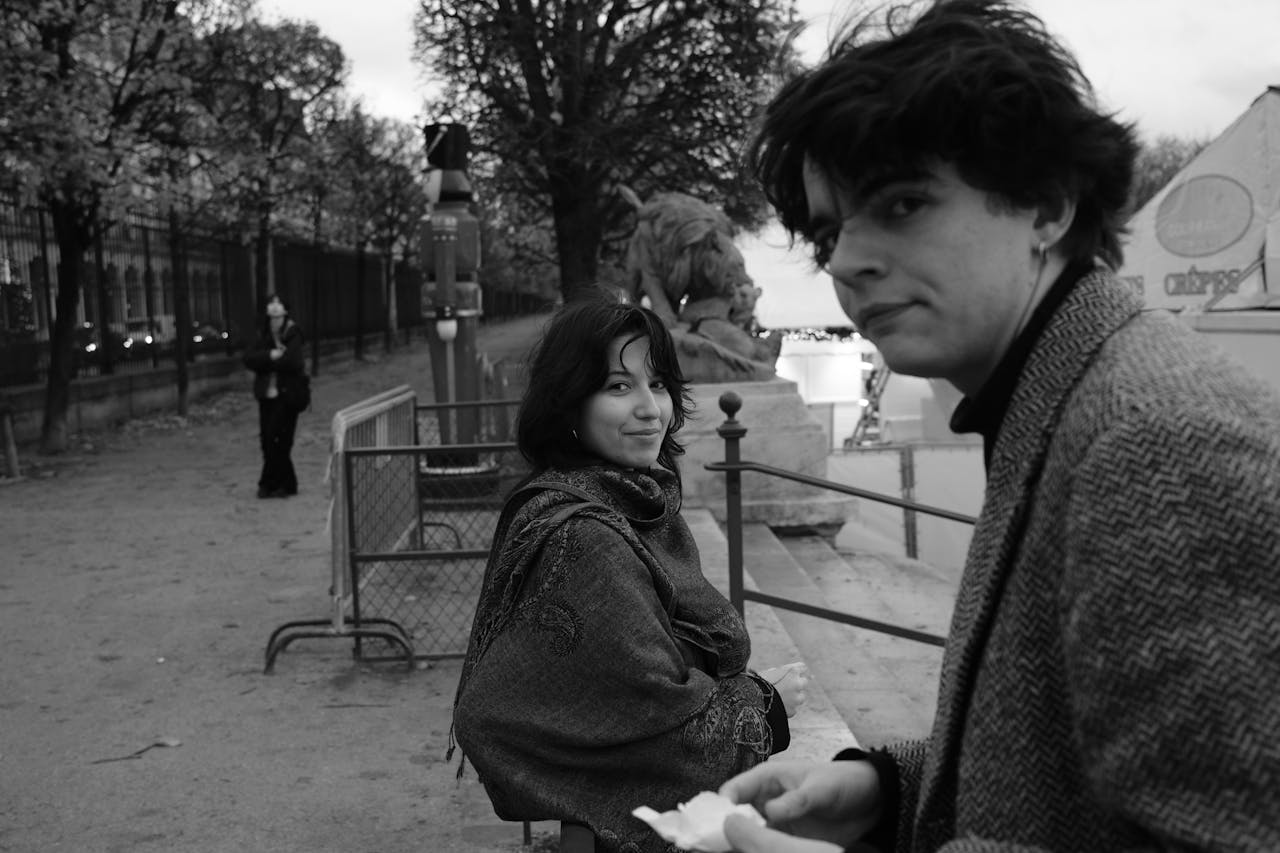
Truly seeing your partner isn’t just about making eye contact or remembering their favorite foods — it’s about creating a consistent practice of deep recognition. Years of couples work has shown me that “seeing” is both an art and a skill that can be developed with intention and practice.
The Art of Deep Listening
The foundation of making someone feel seen lies in how we listen. This goes beyond simply hearing words — it’s about receiving their full experience. When your partner speaks, try to listen not just to the content, but to the emotional undercurrent beneath their words. Are they seeking validation, sharing joy, or processing confusion? Your role isn’t to fix or judge but to create a space where they feel fully heard.
Key practices for deep listening include:
- Putting away your phone and other distractions completely during important conversations
- Using gentle prompts like “Tell me more about that” to show you’re truly engaged
- Reflecting back on what you hear, especially the emotional elements: “It sounds like that situation made you feel really unappreciated”
- Resisting the urge to immediately offer solutions unless specifically asked
Honoring Their Inner World
We all carry a rich internal landscape of hopes, fears, and dreams. Making your partner feel seen means regularly checking in with this inner world. What are they excited about lately? What’s keeping them up at night? What simple pleasures make their day better?
Try these connection-building questions:
- “What’s something you’ve been thinking about lately that we haven’t discussed?”
- “How has your perspective changed on [something they care about] since we last talked about it?”
- “What made you smile today?”
- “Is there anything worrying you that you’d like to share?”
Celebrating Their Evolution
Too often, we create fixed images of our partners in our minds, failing to recognize how they grow and change. Making someone feel seen means acknowledging and celebrating their evolution. Notice when they’re developing new interests, shifting perspectives, or working through challenges. Comment on these changes with curiosity and appreciation rather than resistance.
The Power of Witnessed Moments
Some of the most profound experiences of being seen happen in small, everyday moments. When your partner comes home tired, acknowledge it before they have to say anything. When they’re quietly working on something they care about, take a moment to observe and appreciate their focus. These micro-moments of recognition can be more powerful than grand gestures.
Meaningful ways to create witnessed moments:
- Notice and acknowledge their emotional state: “I can see today was challenging for you”
- Recognize their efforts, especially in areas they value: “I noticed how patient you were with the kids today”
- Share specific observations about their growth: “You seem more confident in meetings lately”
- Remember and reference details from previous conversations, showing you were truly listening
Final Thoughts
Feeling truly seen in a relationship is a profound experience that transcends surface-level interactions. It involves recognizing and appreciating the essence of each other beyond behaviors and facades.
What’s more, recognizing signs of emotional invisibility, such as narrative disconnect and the death of curiosity, is crucial in addressing disconnection. By embracing practices of deep listening, active recognition, and self-awareness, couples can rekindle the emotional visibility that strengthens their bond.
Remember, folks, being seen is not just about understanding but about embracing and celebrating each other’s authentic selves, ensuring relationships are rooted in mutual respect and deep emotional connection.
Looking to feel seen in your relationship and make your partner feel seen too? Reach out for a free consultation or sign up for my relationship design review.

Hi, I’m the author of this post and have helped save hundreds of relationships in my private practice in Erie, Colorado. If you are struggling to feel seen in your relationship, you are not alone. Sometimes, outside help and guidance can make the difference between a lifetime of happiness or calling it quits. I encourage you to reach out for a free consultation or sign up for my relationship design review. Hope to chat soon. ~Geoff
