

You can care deeply about your partner and still feel stuck in the same conversations. Small misunderstandings turn into tension. Over time, it can feel like you’re talking more but connecting less.
When communication keeps breaking down, it wears on the relationship. You start choosing silence to avoid conflict. Or every discussion feels like it might turn into another argument.
Learning practical communication skills for couples exercises can change that pattern. Not by fixing your partner, but by changing how conversations happen. This guide focuses on small shifts that help communication feel calmer, clearer, and more supportive.
Below are a few simple exercises you can try together. You don’t need to do all of them. Even one can start to shift how your conversations feel.
Active Listening Exercises

Active listening involves giving full attention, reflecting back what you hear, and avoiding interruptions so the other person feels understood and respected.
Instead of responding right away, the focus stays on understanding. Here are simple ways couples can practice active listening in everyday conversations:
- Uninterrupted listening: One partner speaks for a few minutes while the other listens without interrupting, correcting, or offering advice.
- Staying present: Helpful listening cues include gentle eye contact, open body posture, and no phones or distractions.
- Reflecting back: After listening, summarize what you heard in your own words to check understanding.
- Clarifying if needed: The speaker confirms or gently corrects the reflection before the roles switch.
- Validating emotions: Acknowledge your partner’s feelings without fixing, minimizing, or debating them.
- Resisting problem-solving: Understanding comes first; solutions can wait until both people feel heard.
“I” Statements Practices

“I” statements help couples talk about difficult topics without putting each other on the defensive. Instead of blaming or accusing, they focus on personal experience and needs. This shift alone can change the tone of a conversation.
Rather than pointing out what your partner did wrong, the focus stays on what you noticed, how you felt, and what you need. This makes it easier for your partner to listen without feeling attacked. Conversations stay calmer and more grounded.
When discussions start with “you always” or “you never,” tension usually follows. Rephrasing those moments using “I” statements helps slow things down and keeps both people engaged. It turns conflict into something you can work through together.
Practicing this with everyday situations helps it feel more natural over time. Sharing small frustrations and needs builds confidence without overwhelming the conversation. Slowly, these exchanges begin to feel less charged and more collaborative. Partners also practice this tool through guided relationship coaching that supports healthier conversations.
“I” statements don’t remove disagreement. They make it safer to stay present during it. When partners feel heard instead of blamed, understanding becomes easier to reach.
For example, instead of “You never listen to me,” try saying, “I feel unheard when I’m interrupted.”
Balanced Dialogue and Check-Ins

Balanced dialogue helps both partners feel equally heard. It keeps one voice from taking over and makes conversations feel more cooperative. Simple time boundaries can help discussions stay focused and fair.
One helpful structure is taking turns speaking and reflecting. One partner shares for a few minutes about a topic, while the other listens, then reflects back what they heard, such as, “I hear your excitement about travelling more together.” After that, roles switch so both people feel understood.
Daily check-ins help keep communication open between bigger conversations. In the morning, partners might share a brief appreciation, like, “I loved how you made coffee this morning.” In the evening, a short check-in can sound like, “High: I felt good about work today. Low: I was exhausted by traffic.”
Setting aside a longer weekly check-in helps couples stay aligned. Asking questions like, “What’s one goal we have this month?” creates space for connection before tension builds.
Emotional and Nonverbal Deepeners

Some feelings are easier to sense than explain. Emotional and nonverbal connection helps couples access what lies underneath words. It creates safety for honesty without forcing conversation.
Ways to deepen connection without relying on words include:
- Naming the deeper emotion behind a reaction, such as “Under my irritation about the mess, I feel insecure about us as a team.”
- Responding with simple validation, like, “I see that, and it makes sense,” followed by a brief hug.
- Sitting together and holding gentle eye contact for a few minutes without talking.
- Sharing what came up afterwards, such as, “I felt tender seeing you like that.”
- Using small gestures during conversations, like holding hands or sitting close.
These quiet moments often settle the nervous system quickly. They reinforce emotional safety and closeness in ways that conversation alone sometimes can’t.
Gratitude and Positivity Builders

Gratitude helps couples stay connected during everyday moments, not just during conflict. Noticing what’s going well builds emotional balance and makes harder conversations easier.
Simple ways to practice gratitude together include:
- Sharing one specific appreciation during meals, like, “I appreciated how you listened earlier.”
- Writing short gratitude notes during the week and reading them together later.
- Naming small moments of care, such as a hug, a kind word, or showing up when it mattered.
How partners respond to good news also matters. When your partner shares something positive, leaning in with curiosity and encouragement strengthens the connection. A response like, “That’s exciting, how did it feel?” helps joy grow instead of passing by.
These small habits shift the tone of a relationship. Positivity becomes something you return to naturally, even when stress or disagreement shows up.
Conflict Drills and De-Escalators

Conflict happens in every relationship. What matters most is how quickly conversations slow down before they turn hurtful. Research shows that slowing down during disagreements helps couples avoid escalation and talk more calmly.
Helpful ways to reduce escalation include:
- Taking a pause when tension rises and agreeing to return to the conversation later.
- Naming what you feel instead of criticizing, such as, “I feel worried when this happens.”
- Shifting from blame to responsibility by acknowledging your part.
- Asking for a short break when emotions feel overwhelming, then returning once calm.
Clear signals can help in heated moments. A simple hand gesture or agreed-upon phrase can pause a conversation before it spirals.
Creating tech-free time during meals or before bed also reduces background stress that makes conflict harder to manage.
Practicing these skills during calm moments makes them easier to use when emotions run high.
How to Start Tonight
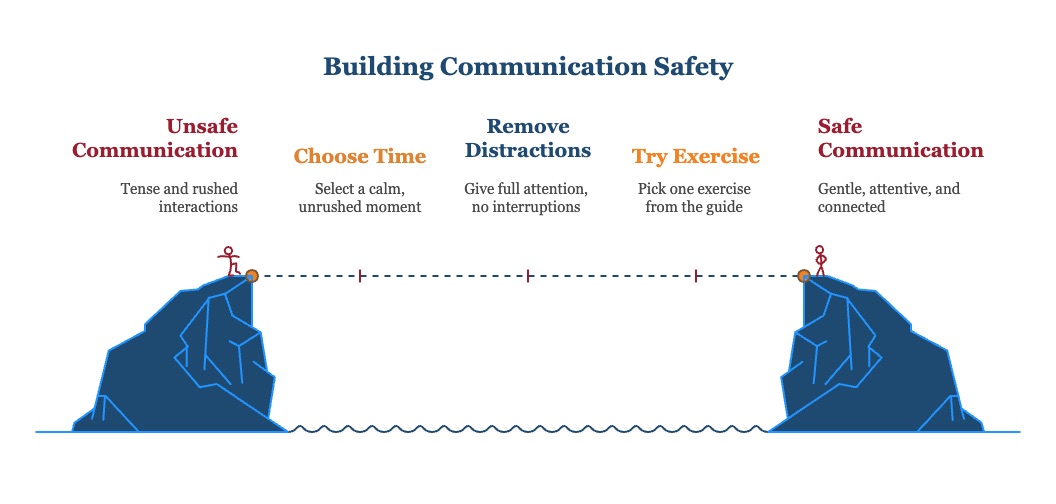
You don’t need to overhaul how you communicate to begin. What matters most is creating a small moment of safety and attention. Starting gently makes it easier to keep going.
- Choose a small window when neither of you feels rushed.
- Set aside distractions and give each other your full attention.
- Pick one exercise from this guide and try it once.
- Focus on how the conversation feels, not on doing it “right.”
- Stop if things feel tense and return to it later.
Healthier Conversations Start Small
Communication doesn’t improve by doing more. It improves when conversations feel safer and more understood. Communication skills for couples exercises work best when they’re used gently and consistently.
You don’t need to try everything at once. One small change can shift how conversations feel and help tension soften sooner.
If you’d like support as you work on communication together, reach out today and take the next step toward healthier conversations.
Frequently Asked Questions
What are the best communication skills for couples exercises to start with?
Begin with three essentials: active listening with mirroring, simple “I” statements, and a daily gratitude share. These build safety, clarity, and warmth quickly. Practice 10–15 minutes a day to see noticeable shifts in understanding and connection within a few weeks.
How often should couples practice communication techniques together?
Aim for short, consistent practice: 10–20 minutes daily, plus one longer weekly check‑in. Frequency matters more than intensity. Treat it like emotional fitness, regular small reps of communication techniques couples use together create lasting, automatic positive habits over time.
Can communication exercises help if my partner usually shuts down?
Yes, if you start gently and safely. Use low‑pressure topics, shorter timers, and structured formats like speaker‑listener. Emphasize “I feel” instead of “you always.” Over time, predictable, nonjudgmental exercises can reduce shutdowns and help your partner risk opening up.
Do communication skills for couples exercises work without therapy?
They can still create significant improvement on their own. Practicing listening, validation, and clear “I” statements regularly often reduces conflict and increases intimacy. Therapy simply adds guidance and accountability, which can speed up progress if you feel stuck or overwhelmed using exercises alone.
How long does it take to see results from couples communication practice?
Many couples notice small shifts, less defensiveness, and fewer interruptions within one to two weeks of steady practice. Bigger changes in trust and conflict patterns usually emerge after four to eight weeks of consistent communication techniques couples apply thoughtfully in real-life situations.

