
You’re in the middle of a hard conversation, and suddenly your partner goes quiet. No response. No explanation. Just distance.
That silence can hurt more than the argument. Your body stays tense. Your thoughts start spiraling. You’re left wondering what just happened and what you’re supposed to do next.
Some silence comes from emotional overwhelm. Other silence is intentional. Knowing the difference changes how you respond and can prevent the situation from getting worse.
I work with couples who get stuck in these patterns, helping restore safety so silence doesn’t turn into lasting damage. This article explains stonewalling vs silent treatment, how each one affects emotional safety, and what helps conversations restart calmly.
What Is Stonewalling? Understanding Emotional Overwhelm

Stonewalling happens when a person becomes emotionally overwhelmed during conflict, and their body shuts down. They may go quiet, stop responding, or struggle to speak, even though they are still listening.
When this happens, the nervous system is under stress. Heart rate increases. Muscles tense. The brain shifts into a protective state that makes thinking and talking harder. This is often called emotional flooding, where the body needs a pause before it can re-engage.
Stonewalling is about needing space to calm down, not about pushing someone away. When this difference is understood, the silence feels less confusing, and the conversation can restart more safely later.
What Is Silent Treatment? The Intentional Refusal to Engage

Silent treatment happens when a person chooses to stop communicating during or after a conflict. According to a study, silent treatment is a common stonewalling behavior that can be intentional or unintentional.
It is used to avoid a conversation, express anger, or gain control over a situation. Instead of addressing the issue directly, the connection is withheld.
Silent treatment often begins suddenly and can last for hours or days. There may be no explanation or reassurance. The lack of response leaves the other partner guessing, replaying the situation, and feeling shut out.
Over time, this pattern can damage trust and emotional safety. Silence becomes a source of anxiety rather than relief, and repair feels harder without clear communication or boundaries.
Stonewalling vs. Silent Treatment: The 7 Key Differences
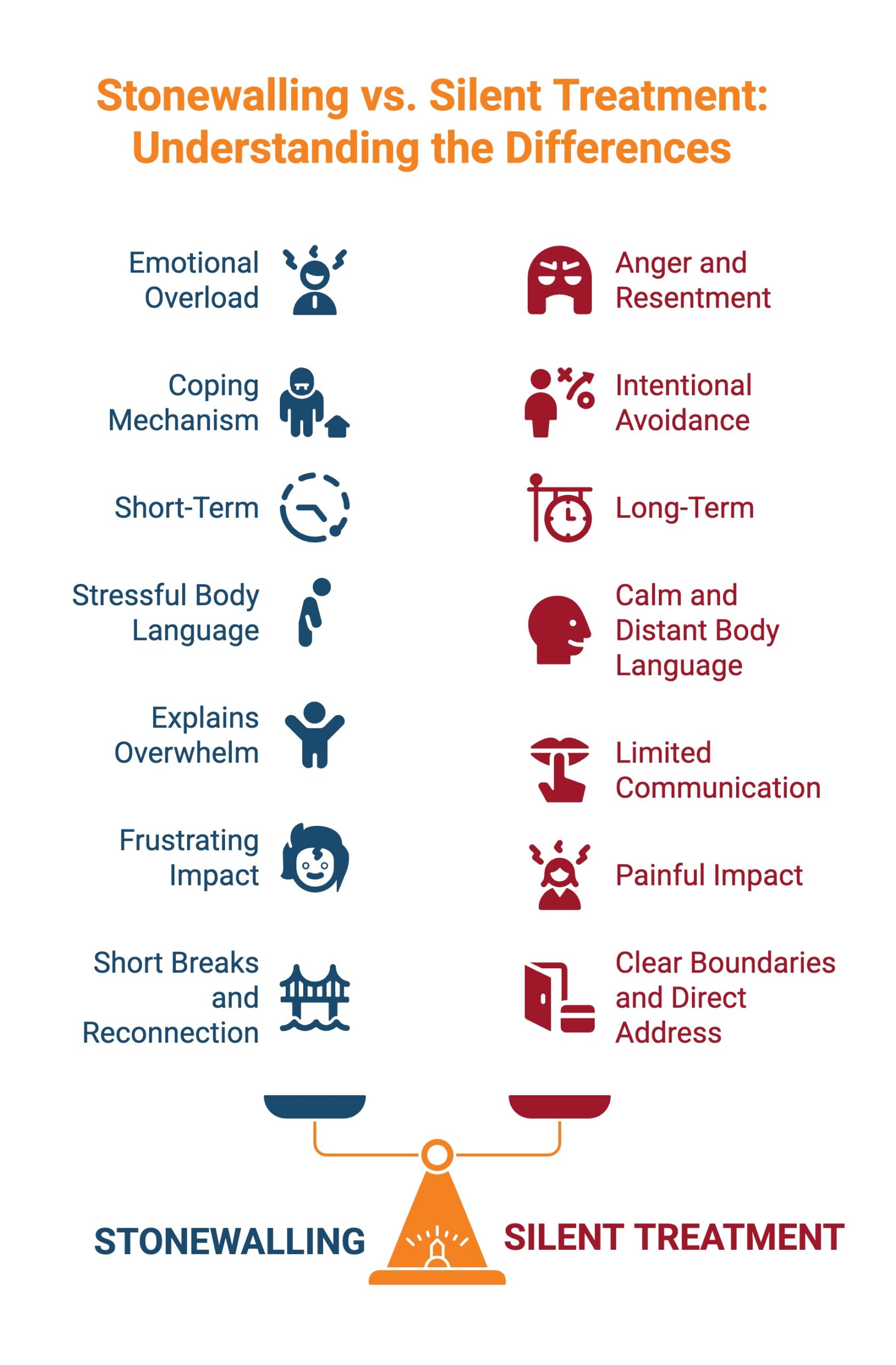
Understanding the difference between stonewalling vs. silent treatment helps reduce confusion and blame. Both can hurt, but they come from very different places.
These distinctions help clarify what’s happening so you can respond more thoughtfully:
1. Trigger
Stonewalling usually happens when emotions get too intense during a conversation. The person feels overwhelmed and their body reacts by shutting down. Silent treatment often starts after anger or resentment builds and is used as a way to avoid or punish.
2. Intent
With stonewalling, there is no plan or goal behind the silence. The person is trying to cope with emotional overload. Silent treatment is intentional. The person chooses not to engage even though they could.
3. Duration
Stonewalling is usually short-term. Once emotions settle, the person is often able to talk again. Silent treatment can last much longer, sometimes hours or days, without any clear signal of when communication will resume.
4. Body Language
During stonewalling, the body often shows stress. A person may look tense, avoid eye contact, or seem frozen. During silent treatment, the person often appears calm and emotionally distant rather than overwhelmed.
5. Follow-Up Communication
After stonewalling, people often return to the conversation and explain that they were overwhelmed. With silent treatment, communication may stay limited, avoidant, or emotionally closed off.
6. Emotional Impact on You
Stonewalling can feel frustrating and confusing in the moment. Silent treatment often feels more painful over time, creating feelings of rejection, insecurity, or being shut out.
7. Path to Repair
Stonewalling is best handled with short breaks and a clear plan to reconnect once calm returns. Silent treatment requires clear boundaries and a willingness to address the issue directly instead of avoiding it.
How Stonewalling and Silent Treatment Affect Communication and Emotional Safety

Silence can quickly change how communication feels in a relationship. When it shows up repeatedly, it can affect emotional safety in different ways.
The emotional effects of stonewalling often include:
- Conversations stop suddenly when one partner becomes overwhelmed
- Confusion or anxiety for the partner who is still trying to connect
- Increased tension when the overwhelmed partner is pushed to keep talking
- Temporary drops in emotional safety that usually improve once communication resumes
Stonewalling tends to disrupt communication in the moment, but repair is often possible when the pause is understood and addressed.
Silent treatment affects communication more deeply by:
- Ending conversations without explanation or reassurance
- Leaving the other partner guessing what went wrong
- Creating emotional distance instead of relief
- Undermining trust and a sense of reliability over time
This kind of silence often feels less like a pause and more like a disconnection.
Long-Term Effects on Relationship Health

When silence becomes a repeated pattern, it slowly wears down a relationship. The damage usually happens over time, not in one dramatic moment.
Ongoing stonewalling increases emotional stress for both partners. Research on relationship conflict patterns has shown that chronic stonewalling is a strong predictor of relationship breakdown when it goes unaddressed. Over time, the body stays tense, stress hormones remain elevated, and physical symptoms like headaches or chronic fatigue can develop.
Silent treatment often has deeper emotional consequences. Being repeatedly shut out can create anxiety, lower self-worth, and a growing sense of emotional insecurity. As connection feels less reliable, intimacy fades and conversations become more guarded or avoided altogether.
The encouraging part is that these patterns can change. With guidance from relationship coaching, couples can recognize these patterns earlier and learn healthier ways to communicate during conflict. When silence is recognized early and addressed with clearer communication and boundaries, emotional safety can be rebuilt. Small, consistent shifts help prevent long-term damage and support healthier connection.
5 Gentle Ways to Respond and Rebuild

When silence shows up, the goal is not to force a conversation. It’s to protect emotional safety while keeping the door open to repair.
Acknowledge Overwhelm Without Pressure
If your partner shuts down, start by naming what you see instead of pushing for answers. Saying something like, “I can see this feels like a lot right now. Let’s pause and come back to it,” helps lower tension and gives their nervous system space to settle.
Self-Soothe Before Re-Engaging
Use the pause to calm your own nervous system before continuing. Stepping outside for a short walk, slowing your breathing, or reminding yourself that the silence isn’t rejection can prevent the situation from escalating.
Name the Impact and Set a Gentle Boundary
If silence continues, share how it affects you without blaming or accusing. A statement such as, “When the conversation stops without explanation, I feel shut out. I need us to talk about this when we’re both ready,” keeps the focus on respect and connection.
Use Simple Scripts to Create Safety
Short, agreed-upon phrases can make pauses feel safer. Clear language about needing time to calm down helps prevent misunderstanding. Following through on returning to the conversation builds trust over time.
Seek Support if the Pattern Repeats
When silence becomes a recurring pattern, outside support can help. Working with a relationship coach or therapist gives couples tools to pause conflict safely, regulate emotions, and reconnect without escalation. With guidance, conversations become calmer, clearer, and more consistent over time.
When Silence Becomes a Signal
Silence can mean different things in different moments. Understanding stonewalling vs silent treatment helps you respond in a way that protects the connection instead of adding more distance.
When you know what kind of silence you’re facing, you can choose patience, boundaries, or support with more confidence. Small, thoughtful responses often make the biggest difference.
If silence keeps showing up in your relationship, support can help bring clarity and safety back into the conversation. Reach out today if you’d like help navigating this together.
Frequently Asked Questions
Is stonewalling the same as giving someone space?
No. Stonewalling happens when a person becomes emotionally overwhelmed and shuts down involuntarily. Healthy space is intentional, communicated, and includes a plan to reconnect. Space supports regulation and repair, while stonewalling pauses communication because the nervous system is overloaded and needs time to settle.
How long is too long for silence in a relationship?
Silence becomes too long when there’s no explanation, reassurance, or plan to reconnect. A short pause can help emotions settle, but silence lasting hours or days often increases anxiety and emotional distance. What matters most is whether the silence feels safe, intentional, and temporary, or confusing and unresolved.
Can silent treatment be emotionally abusive?
In some relationships, yes. When silence is repeatedly used to punish, control, or intimidate, it can harm emotional safety. Over time, this pattern may lead to anxiety, self-doubt, and fear of conflict. Context matters, but ongoing intentional withdrawal can be damaging if it replaces healthy communication.
What should I do if my partner shuts down during arguments?
Start by lowering intensity instead of pushing for answers. Acknowledge the shutdown, suggest a short break, and focus on calming yourself. Agree on a time to revisit the conversation. Pressuring someone who is overwhelmed often escalates conflict rather than resolving it.
When should couples seek help for communication shutdowns?
Support can be helpful when silence becomes a repeated pattern, and conversations rarely repair on their own. A relationship coach or therapist can help identify triggers, teach regulation tools, and create safer ways to pause and reconnect. Early support often prevents long-term emotional distance.
